
Street-Legal Golf Cart Requirements: What You Need to Know (LSV Compliance Guide)
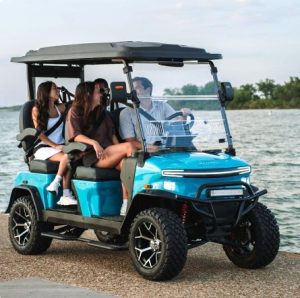
Converting a standard golf cart or purchasing a factory-built Low-Speed Vehicle (LSV) to drive legally on public roads is one of the fastest-growing trends among neighborhood commuters. However, taking a golf cart off private property or the golf course and onto municipal streets requires compliance with specific federal, state, and local safety regulations.
This guide outlines the exact requirements needed to make a golf cart street-legal.
1. Golf Cart vs. Low-Speed Vehicle (LSV): The Legal Difference
Before driving on public roads, it is essential to understand the legal distinction defined by the National Highway Traffic Safety Administration (NHTSA) under Federal Motor Vehicle Safety Standard 500 (FMVSS 500):
-
Standard Golf Cart: Manufactured primarily for golf course or low-speed recreational use on private property. Top speed is usually capped at 15–19 mph, and it lacks required federal highway safety equipment.
-
Low-Speed Vehicle (LSV): A legally recognized motor vehicle capable of speeds between 20 mph and 25 mph. LSVs are equipped with mandatory safety features, assigned a 17-digit VIN, and permitted on public roads with posted speed limits of 35 mph or lower (depending on state law).
2. Mandatory Street-Legal Safety Equipment
To comply with federal LSV standards and state Department of Transportation (DOT) registration rules, your vehicle must be equipped with the following safety items:
-
Headlights & Taillights: Functional LED headlights, tail lamps, and brake lights visible from at least 500 feet.
-
Turn Signals: Front and rear turn signal indicators with a dash-mounted control switch and hazard warning lights.
-
Rearview & Side Mirrors: An interior rearview mirror plus driver and passenger side-view mirrors (or a wide-angle 180-degree rearview mirror system).
-
Windshield: A DOT-approved automotive safety glass or high-impact shatterproof acrylic windshield.
-
Seat Belts: Three-point seat belts (or lap belts, depending on state code) for every seating position.
-
Reflectors: Red reflex reflectors on the rear and sides of the vehicle.
-
Horn: An audible electric horn capable of being heard from a distance of 200 feet.
-
Parking Brake: A dedicated foot-operated or automatic mechanical parking brake.
-
17-Digit Vehicle Identification Number (VIN): A federal VIN stamped onto the frame (either from the factory or issued by your state DMV during custom LSV registration).
3. Registration, Insurance & Licensing Requirements
To operate an LSV legally on public roads, owners must fulfill the same basic administrative requirements as traditional passenger cars:
-
Driver’s License: The driver must possess a valid, unexpired driver’s license.
-
Auto Insurance: The vehicle must be covered by a valid auto insurance policy featuring minimum state-required Personal Injury Protection (PIP) and Property Damage Liability coverage.
-
Title & DMV Registration: The vehicle must be titled, registered, and display a valid state license plate on the rear bumper.
-
Safety Inspection: Some states require an initial or annual safety inspection conducted by an authorized state trooper or licensed DMV inspection station before issuing plates.
4. Where Can You Legally Drive a Street-Legal LSV?
-
Road Speed Limits: Federal and state regulations generally permit LSVs on public roads with posted speed limits of 35 mph (or less in some states).
-
Crossing Main Arterials: In most jurisdictions, an LSV can cross highways or roads with higher speed limits at designated intersections controlled by traffic signals.
-
Local Ordinance Check: Municipalities, city councils, and homeowners associations (HOAs) frequently pass local ordinances restricting or specifying which designated streets, paths, and crossings are approved for LSV traffic. Always verify your city or town ordinances before driving on local roads.