
Buying a pre-owned golf cart is one of the smartest ways to enjoy high-end features—like custom seating, lift kits, or street-legal capabilities—at a fraction of the cost of a brand-new vehicle. However, the used golf cart market varies widely in quality. A glossy coat of paint and fresh seat covers can easily hide years of electrical or mechanical neglect.
Knowing how to properly inspect a used golf cart allows you to distinguish between a turnkey deal and an expensive money pit.
At Intermountain Golf Cars, we perform multi-point safety and mechanical inspections on every pre-owned vehicle across our Utah, Nevada, Idaho, and Arizona locations. Here is your ultimate checklist to evaluate whether a pre-owned golf cart has been genuinely well-maintained.
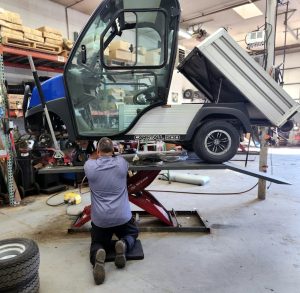
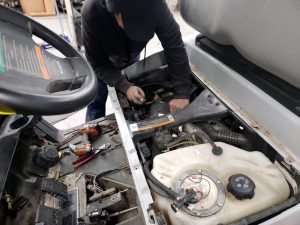
Caption: Checking battery date codes, frame condition, and suspension wear ensures you buy a reliable pre-owned vehicle.
1. Start with the Foundation: Chassis and Frame Inspection
A golf cart’s total longevity relies heavily on its foundational build quality—achieving a 15- to 20-year lifespan starts with choosing a proven, high-quality brand like Club Car or Yamaha. It’s important to note that you are generally not going to get the same longevity out of low-cost imports or off-brand Chinese models. This article pre-assumes you are inspecting a well-built, major American manufacturer.
When crawling underneath a used vehicle, pay close attention to:
-
Aluminum vs. Steel Frames: Brands like Club Car utilize aircraft-grade rustproof aluminum frames. Check for structural cracks or bent crossmembers. On steel-frame carts, inspect for severe rust, flaking metal, or weld damage caused by road salt or spilled battery acid.
-
Under-Seat Battery Trays: Acid spills from neglected lead-acid batteries frequently corrode metal battery trays underneath the seat. Clean, rust-free trays are a clear indicator of a careful previous owner.
2. Inspect the Power System: Battery Age and Wiring
The battery pack represents the highest single maintenance expense on an electric cart. Evaluating its true condition is critical:
-
Check the Battery Date Stamp: Never rely on the seller’s memory alone. Lead-acid batteries have a letter/number date code stamped directly into the lead terminals (e.g., “A24” stands for January 2024). If the lead-acid batteries are over 4 years old, factor an upcoming $800–$1,500 replacement into your offer.
-
Look for Acid Corrosion: Heavy white crust or green corrosion on terminals indicates neglected watering habits or overcharging. Clean, dry battery terminals signal routine maintenance.
-
Verify Lithium Documentation: If the cart has been converted to lithium, request the original conversion receipt, charger, and warranty details. Professionally installed lithium systems (like Eco Battery or RoyPow) offer up to a decade of worry-free operation.
3. Key Maintenance Indicators Checklist
Use this quick visual guide during your initial walkthrough:
| Component | Signs of Good Maintenance | Red Flags of Neglect |
| Tires & Wheels | Even tread wear, matched brand set, correct PSI | Crapped/dry-rotted sidewalls, uneven inner tread wear |
| Steering Play | Tight wheel response with < 1 inch of free play | Loose, wandering steering wheel; clunking sounds |
| Brake Pedal | Firm pedal feel; stops straight without pulling | Soft/mushy pedal; squealing or pulling to one side |
| Charger & Cables | Original matching charger; flexible 4/6 gauge wires | Damaged cord, melted plugs, frayed wiring harness |
| Serial Number | Intact OEM serial plate matching vehicle paperwork | Missing, scratched off, or unreadable serial tag |
Caption: Even tire tread wear and tight steering response indicate proper alignment and suspension upkeep.
4. The Pre-Purchase Test Drive: What to Listen and Feel For
Always take the golf cart on a 10-to-15-minute test drive before making an offer:
-
Acceleration & Solenoid Engagement: Turn the key and gently press the pedal. You should hear a single, crisp “click” from the solenoid, followed by smooth, progressive acceleration without surging.
-
Uphill Power Test: Drive up a mild slope or incline. A healthy battery pack and motor maintain momentum. If the state-of-charge gauge drops dramatically during a single hill climb, the battery pack is failing.
-
Listen for Drivetrain Noise: Drive at full speed (15–19 MPH) in a quiet area. A healthy electric cart should run silently. Excessive rear-end whining or grinding indicates worn transaxle gears or motor bearings.
Buy with Confidence at Intermountain Golf Cars
Why gamble on private driveway sales when you can purchase a factory-certified pre-owned vehicle? At Intermountain Golf Cars, every pre-owned cart in our inventory undergoes a rigorous technical inspection, chassis service, and battery load test before reaching our showroom floor.
Ready to Find Your Next Golf Cart or Schedule a Service?
Stop by any of our showrooms across Utah, Nevada, Idaho, and Arizona, or contact our team directly:
-
Locations: Servicing Sandy, Salt Lake County, St. George, Las Vegas, Mesquite, Prescott Valley, Glendale, Chubbuck, and surrounding regions
-
Phone: (801) 255-8828
-
Email: we*******@*******rs.com
-
Website: intermountaingolfcars.com