
Gas or Electric Golf Cart: Which is Best for Me?
Choosing between a gas-powered and an electric golf cart is one of the most critical decisions you will make when shopping for a vehicle. While both fuel types get you from point A to point B, they offer vastly different driving dynamics, maintenance requirements, and long-term operating costs.
At Intermountain Golf Cars, we help buyers across Sandy, Salt Lake City, and Northern Utah evaluate their specific terrain, daily mileage, and neighborhood guidelines to select the right powertrain.
Here is a clear, practical comparison of gas vs. electric golf carts to help you decide which option belongs in your garage.
Caption: Modern electric lithium models and high-efficiency gas carts side-by-side at Intermountain Golf Cars.
1. Electric Golf Carts: Quiet, Clean, and Low-Maintenance
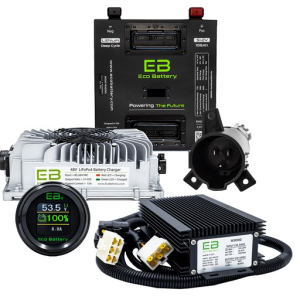
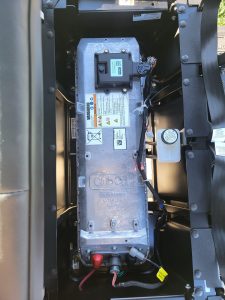
Electric golf carts have surged in popularity, largely driven by advances in battery technology—specifically the shift from traditional lead-acid batteries to modern lithium-ion packs.
The Pros of Electric Carts
-
Silent & Smooth Operation: Electric motors run nearly silently. If you live in a master-planned community, HOA, or RV park, electric models prevent noise complaints and offer a whisper-quiet ride.
-
Minimal Routine Maintenance: Electric powertrains have far fewer moving parts than internal combustion engines. There are no oil changes, spark plugs, fuel filters, or drive belts to replace.
-
Instant Torque & Acceleration: Electric motors deliver instant torque from a complete stop, giving them crisp acceleration and reliable hill-climbing power on moderate inclines.
-
Zero On-Site Emissions: Charging your cart in your garage produces zero exhaust fumes, making electric carts ideal for enclosed storage, indoor industrial facilities, and eco-conscious neighborhood cruising.
The Cons of Electric Carts
-
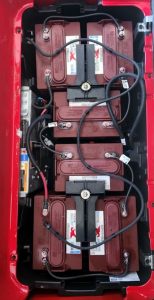
Battery Replacement Costs: Traditional lead-acid batteries require monthly water checks and last about 4 to 6 years before needing a $1,500–$2,500 replacement. Upgrading to a lithium pack eliminates this upkeep, but carries a higher upfront cost.
-
Range Limitations & Recharge Time: Once the battery depletes, you must plug it in for several hours to recharge. You cannot simply pour in a gallon of gas and instantly keep driving.
Caption: Lithium-ion battery conversions eliminate routine water maintenance and charge significantly faster than traditional lead-acid batteries.
2. Gas Golf Carts: Unlimited Range and All-Day Utility
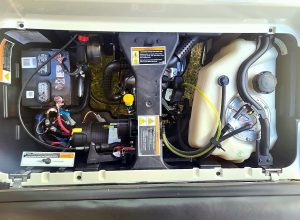
Gas golf carts—powered by clean-burning, fuel-injected engines like the 404cc Subaru EX40 or Kohler EFI—remain the top choice for heavy utility, long distances, and rural properties.
The Pros of Gas Carts
-
Unmatched Range & Fast Refueling: A gas cart can run for days on a single 5- to 6-gallon tank of unleaded gas. Refueling takes less than two minutes at any standard gas pump or fuel can.
-
Superior Towing & Hauling Power: Gas engines maintain consistent power output all day without experiencing the gradual power fade that occurs as an electric lead-acid battery drains. They excel at pulling utility trailers or hauling heavy cargo.
-
Cold Weather Performance: In Utah’s colder late-fall and winter months, gas engines are immune to the temporary capacity loss that cold temperatures cause in traditional lead-acid batteries.
-
High Resale Demand for Utility Use: Farmers, ranchers, construction crews, and large property owners actively search for pre-owned gas models due to their non-stop operational capability.
The Cons of Gas Carts
-
Engine Noise & Exhaust: While modern Electronic Fuel Injection (EFI) engines are significantly quieter and cleaner than older carbureted models, they still produce engine noise and minor exhaust emissions.
-
Ongoing Mechanical Maintenance: Like a small car or lawn tractor, a gas cart requires regular oil changes, air and fuel filter replacements, spark plug updates, and clutch/belt inspections.
-
HOA & Course Restrictions: Some private golf courses, gated communities, and HOAs explicitly restrict or ban gas-powered carts due to noise levels.
Caption: Gas-powered models deliver continuous torque and all-day range for utility work and steep terrain.
3. Direct Feature Comparison
| Feature / Metric | Electric (Lithium-Ion) | Electric (Lead-Acid) | Gas (EFI Engine) |
| Upfront Cost | Moderate to High | Lowest Initial Cost | Moderate to High |
| Fuel / Power Source | Standard 110V Outlet | Standard 110V Outlet | Regular Unleaded Gasoline |
| Maintenance Need | Near Zero | High (Watering/Cleaning) | Moderate (Oil, Belts, Filters) |
| Noise Level | Silent | Silent | Low to Moderate Engine Hum |
| Cold Weather Impact | Minimal | Reduced Capacity | None |
| Refuel / Recharge Time | 2–4 Hours | 8–10 Hours | 2 Minutes |
| Best For | HOAs, Neighborhoods, Daily Commutes | Budget-Conscious Short Trips | Large Acreage, Towing, All-Day Work |
4. Which Fuel Type Should You Choose?
To determine the right match for your daily routine, review these scenarios:
Choose ELECTRIC if:
-
You live in a master-planned community, HOA, or neighborhood with strict noise guidelines.
-
You want a low-maintenance vehicle where you simply plug it in at night and drive it in the morning.
-
Your typical daily trip is under 25–35 miles, making a overnight charge more than sufficient.
-
You plan to store the cart inside an enclosed garage attached to your home without exhaust odors.
Choose GAS if:
-
You own large acreage, a farm, or a commercial property where the cart runs continuously for 6 to 8 hours a day.
-
You use your vehicle in remote areas or campsites where electrical outlets are unavailable.
-
You frequently tow heavy loads, utility trailers, or equipment up steep grades.
-
You want the flexibility of filling the tank in two minutes without waiting on a battery charger.
Test Drive Both at Intermountain Golf Cars
Still on the fence between gas and electric? The best way to decide is to experience the difference firsthand.
Visit our showroom in Sandy, Utah, to test-drive modern lithium electric units alongside clean, fuel-injected gas models. Our team at Intermountain Golf Cars will walk you through total cost of ownership, local HOA compliance, and warranty details so you can buy with confidence.
Explore Our Active Inventory:
Browse our latest gas and electric lineup online today at IntermountainGolfCars.com. Call us with any questions you might have (801) 255-8828