
INTERMOUNTAIN GOLF CARS· TECHNICAL OVERVIEW
Why battery quality is the single most consequential decision you will make for your golf cart—and what separates a premium LiFePO₄ system from a bargain import.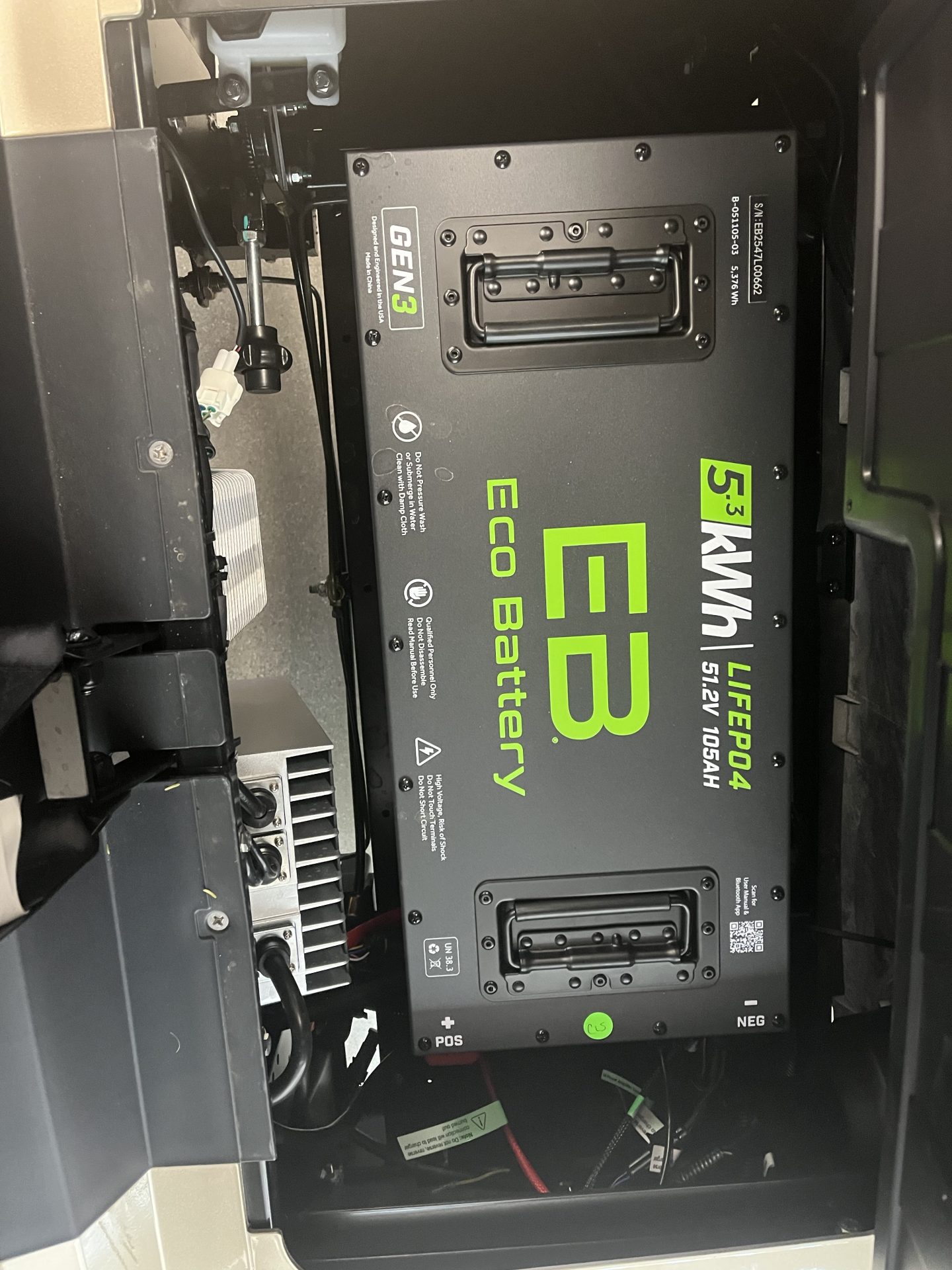
The golf cart industry is undergoing a fundamental transformation. Lead-acid batteries—heavy, high-maintenance, and slow to charge—are being replaced at scale by Lithium Iron Phosphate (LiFePO₄) systems. The advantages are well-documented: faster charge cycles, zero routine maintenance, and a dramatic reduction in weight that meaningfully improves performance and handling.
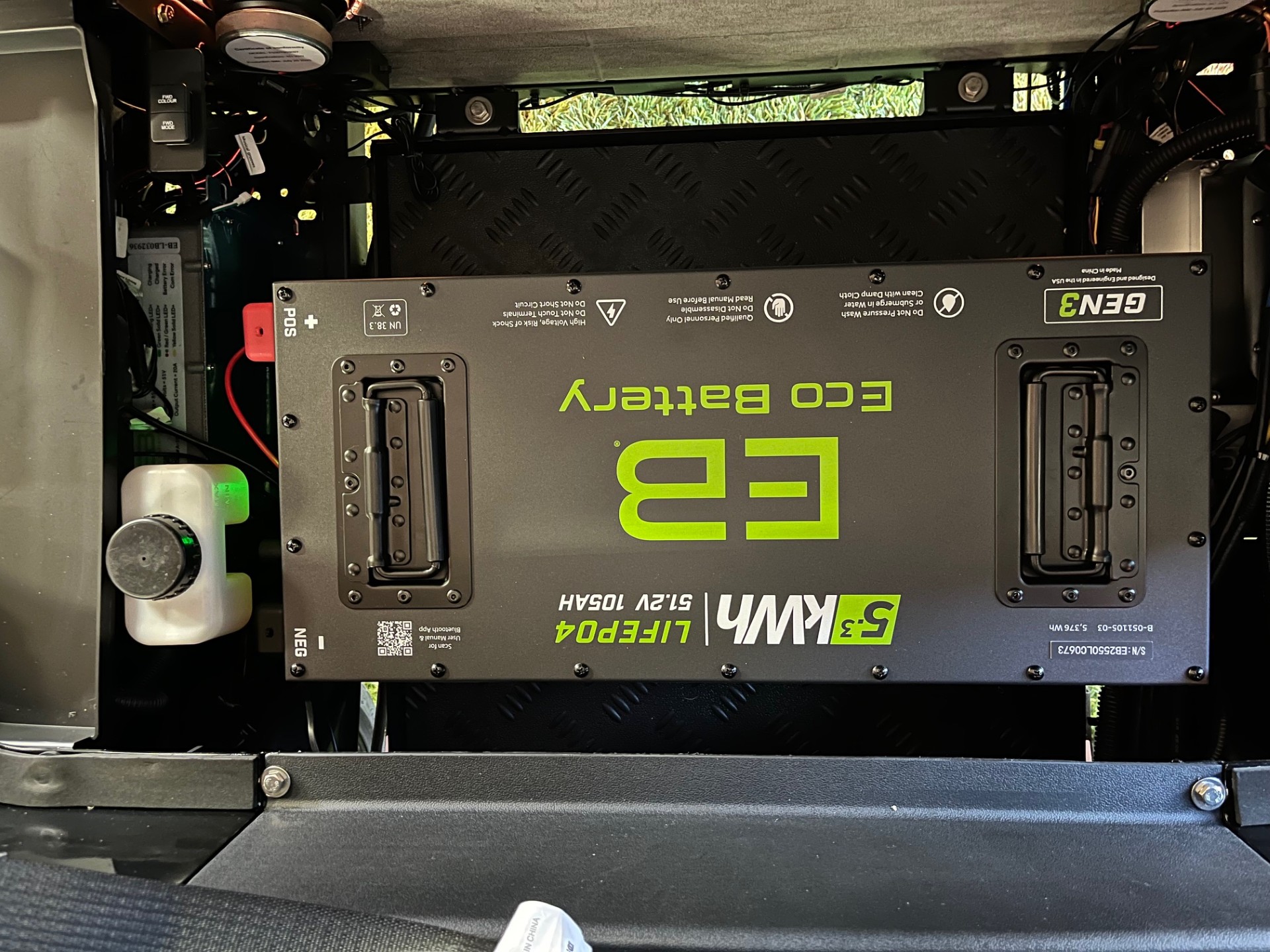
As demand has grown, however, so has the volume of low-cost lithium batteries entering the market—often imported from unvetted overseas manufacturers. The price difference is real. So are the consequences. At Intermountain Golf Cars, we have witnessed firsthand how inferior battery systems lead to premature failure, frustrating downtime, and costly replacements. Premium systems from manufacturers such as Club Car and Eco Battery, by contrast, consistently deliver years of reliable, worry-free service.
What follows is a detailed examination of what actually distinguishes a high-quality lithium system from a budget alternative—and why that distinction matters for your investment.
01 · Battery Management System
The Brain Behind the Battery
The most critical component in any lithium battery is not the cells themselves—it is the Battery Management System (BMS). This internal computer monitors every cell in the pack, balancing voltage distribution and protecting the system against overcharging, short circuits, and thermal events.
| Premium Systems
Factory-installed Club Car and Eco Battery units employ purpose-built BMS hardware engineered specifically for the high-amperage demands of golf cart operation. The BMS monitors individual cells and manages surge loads—such as accelerating a loaded cart up a steep grade—without interruption. |
Budget Imports
Many imported batteries use generic, off-the-shelf BMS units designed for low-draw applications such as solar storage or consumer electronics. When subjected to the sudden amperage surge of golf cart acceleration, these controllers frequently trip, leaving the cart stranded until the system resets. |
02 · Thermal Management
The Winter Test
Cold weather is among the most revealing stress tests for lithium battery quality. Lithium Iron Phosphate cells have a well-documented physical limitation: they cannot safely accept a charge when internal cell temperature falls below 32°F (0°C). Charging in sub-freezing conditions causes a destructive process known as lithium plating, which permanently reduces capacity and can lead to premature cell failure.
| Premium Systems
Quality batteries incorporate internal heating elements and smart BMS logic that automatically bring cell temperature to a safe threshold before initiating a charge cycle. For owners in Utah, Idaho, and other northern climates, this feature is not optional—it is essential. |
Budget Imports
Most budget batteries omit temperature sensors or heating capability entirely. Some will refuse to charge without explanation. Others—more dangerously—will proceed regardless of cell temperature, silently degrading the battery’s lifespan through a single winter season. |
03 · Cell Grade
Grade A vs. Secondary Cells
Battery cells are graded during the manufacturing process. Grade A cells—new, high-density, and manufactured to the most stringent capacity and safety tolerances—are the standard used by Club Car, Eco Battery, EZ-GO, and Yamaha.
Discount manufacturers routinely source Grade B or recycled “secondary” cells to reduce production costs. These cells may appear identical externally, but they carry lower energy density, elevated failure rates, and a significantly shorter cycle life. A premium Grade A battery may deliver 3,500 or more charge cycles over a decade of use. A budget system with secondary cells can begin exhibiting substantial range loss within two to three years.
| “The price difference between a budget and premium lithium battery is typically 30 to 40 percent. When a premium system lasts twice as long and performs reliably in cold weather, the ‘expensive’ battery becomes the less costly choice over time.” |
04 · Construction Quality
Built for the Demands of the Course
Golf carts operate in environments that subject their components to continuous vibration—gravel paths, uneven terrain, and bumpy fairways. A battery’s internal construction must be capable of withstanding this sustained mechanical stress.
| Premium Systems
Premium batteries feature thick copper busbars, heavy-duty internal wiring, and cells that are mechanically secured or encased in vibration-dampening material. The enclosure is constructed from rugged, fire-retardant materials designed to withstand impact and prevent moisture intrusion. |
Budget Imports
Many no-name batteries use thin connection tabs and spot welds to hold cells in place. Prolonged vibration causes these joints to fracture or internal wiring to abrade—resulting in shorts, power loss, or complete battery failure. Flimsy plastic housings allow debris and moisture to contact the cells. |
05 · System Integration
Compatibility and Onboard Technology
A lithium battery that does not communicate properly with the vehicle creates an incomplete ownership experience. Generic replacement batteries frequently fail to interface with factory state-of-charge gauges, leaving owners without reliable fuel-level information.
Premium systems provide a fully integrated ecosystem. Eco Battery upgrades installed at Intermountain Golf Cars include proprietary digital gauges calibrated to the specific chemistry of the battery, ensuring accurate readings at all times. Many modern systems extend this integration further with Bluetooth connectivity, enabling owners to monitor individual cell health directly from a smartphone application.
06 · Warranty and Support
Where Real Value Is Measured
Perhaps the most practically significant difference between premium and budget batteries is what happens when something goes wrong.
A generic battery purchased through an online marketplace typically carries a warranty backed by an overseas manufacturer with no domestic service infrastructure. Resolving a claim may require shipping a battery weighing more than 100 pounds internationally—often at the owner’s expense—with no guarantee of a timely resolution.
A Club Car with a factory-installed battery system, or an Eco Battery upgrade from an authorized dealer, is supported by a domestic warranty with local service capability. At Intermountain Golf Cars, warranty issues are diagnosed on-site. Resolutions are measured in days, not months.
| A Straightforward Conclusion
The purchase price of a budget lithium battery may appear attractive. When evaluated over the full ownership cycle—accounting for longevity, performance consistency, cold-weather reliability, and the realistic cost of warranty resolution—a premium system represents the more economical choice. At Intermountain Golf Cars, we carry only the lithium systems we trust unconditionally: factory Club Car installations and Eco Battery replacement and upgrade packages. That commitment reflects more than 40 years of experience serving golf cart owners across Utah, Idaho, Nevada, and Arizona. Quality, in this industry as in most, is not a premium—it is a standard. |
Paul Jensen has over 13 years of experience with Intermountain Golf Cars, a Club Car dealer for more than 40 years with eleven locations across Utah, Nevada, Arizona, and Idaho, specializing in new and used golf carts, custom builds, and lithium battery upgrades. Learn more at intermountaingolfcars.com