
Golf Cart Trends for 2026: What’s Driving the Industry Forward
The golf cart market is accelerating into 2026, evolving from simple course transporters to versatile, tech-savvy vehicles for neighborhoods, resorts, and even light commercial use. With the U.S. market projected to grow from $1.79 billion in 2025 to $1.87 billion in 2026 at a CAGR of 4.9%, and global figures reaching $2.23 billion by year-end, the industry is buzzing with innovation. This growth is fueled by rising demand for eco-friendly mobility, urban expansion, and recreational lifestyles. But what sets 2026 apart? Below, we explore the top trends shaping the future of golf carts, drawing from industry reports and dealer insights. Whether you’re a buyer, owner, or enthusiast, these developments could redefine how you use your cart.
1. The Lithium Battery Boom: Longer Range, Smarter Power
Lithium-ion batteries (especially LiFePO4) are no longer a premium upgrade—they’re becoming standard in 2026 models. With lead-acid batteries fading due to shorter lifespan and maintenance hassles, lithium offers 2,000–5,000 cycles vs. 300–500, faster charging (2–4 hours vs. 8–12), and 20–50% more range (up to 60 miles per charge). Costs are dropping 5–10% annually, making them accessible for mid-range carts. Trend spotlight: Smart BMS (Battery Management Systems) with Bluetooth apps for real-time monitoring of charge, health, and temperature. This prevents over-discharge and extends life in cold climates. Why it matters: Expect 80%+ of new carts to be lithium-equipped, reducing environmental impact and ownership costs.
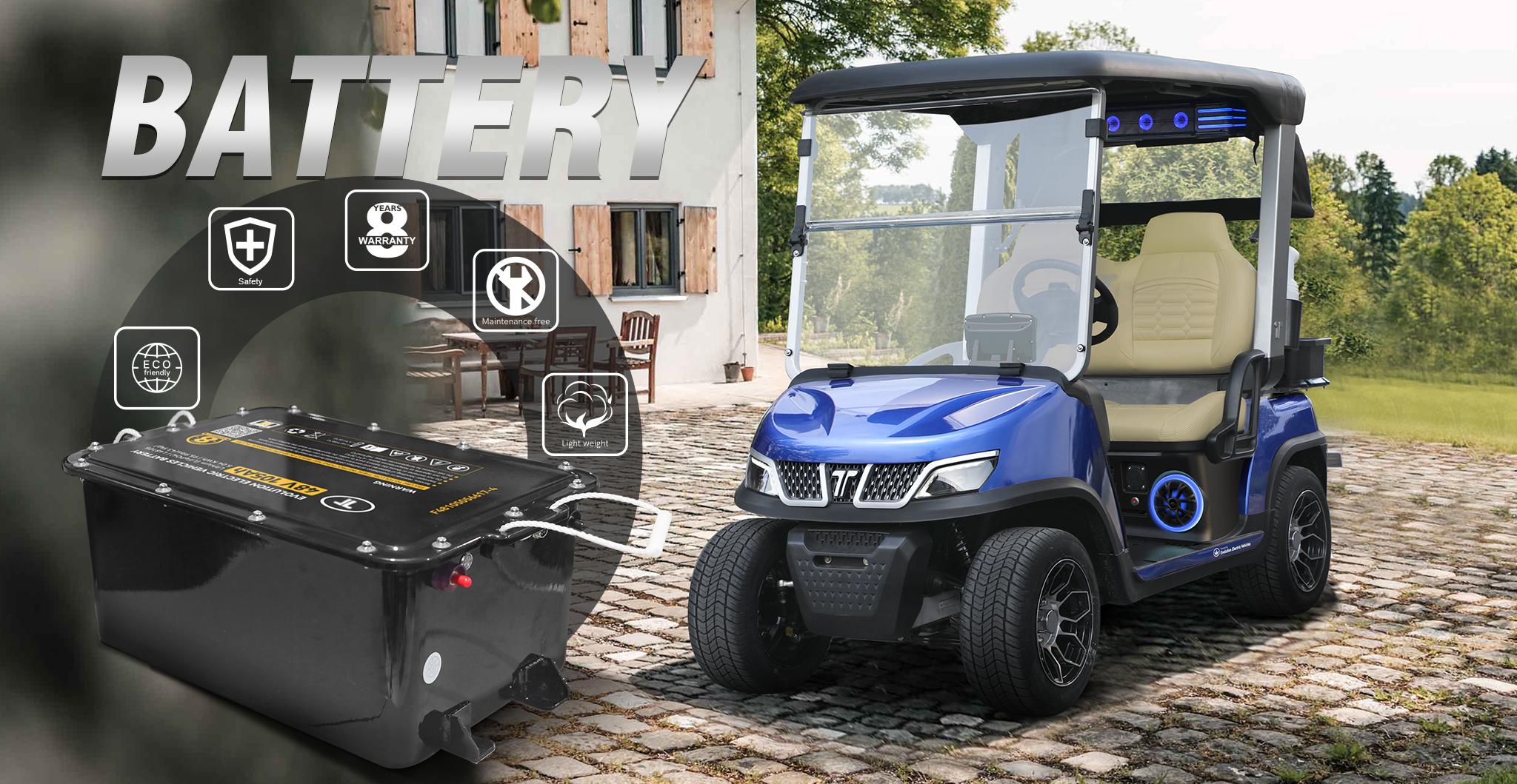
(A modern golf cart showcasing advanced LiFePO4 battery integration for extended range.)
2. Electrification Takes Center Stage
Electric golf carts are dominating, capturing 81.81% of market share in 2025 and projected to hit 85% in 2026. Stringent emission regulations and rising fuel prices are pushing manufacturers toward zero-emission models. Gas options persist for heavy-duty utility, but electric’s smoother ride and lower operating costs (electricity vs. gas) win for most users. Trend spotlight: Hybrid experiments (gas + electric assist) for utility carts, but full electric leads with improved AC motors for better torque on hills. Why it matters: With global CAGR of 6% through 2030, electrification supports carbon neutrality goals, appealing to eco-conscious buyers in resorts and communities.
3. Street-Legal and Neighborhood Mobility Surge
Street-legal low-speed vehicles (LSVs) are exploding, with 2026 models emphasizing safety features like seatbelts, mirrors, LED lights, and turn signals to meet NHTSA standards. States like Florida, Texas, and Arizona are expanding LSV-friendly laws, allowing up to 35 mph in designated areas. Trend spotlight: Custom LSV kits for conversions, plus factory street-legal options from all major brands. Expect more carts with CarPlay/Android Auto for navigation. Why it matters: Urban/suburban use now rivals golf courses, driving market growth to $3.16 billion by 2033. This trend blurs lines between carts and small EVs.
4. Solar-Assisted and Sustainable Innovations
Solar-powered carts are gaining traction, with integrated panels extending range by 10–20 miles daily. 2026 models feature flexible solar roofs charging lithium batteries on the go, reducing grid reliance. Trend spotlight: Eco-friendly materials (recycled plastics, bio-based seats) and solar trickle chargers as standard add-ons. Why it matters: Aligns with green trends, especially in sunny regions—projected to boost Asia-Pacific market to $525 million by 2030.
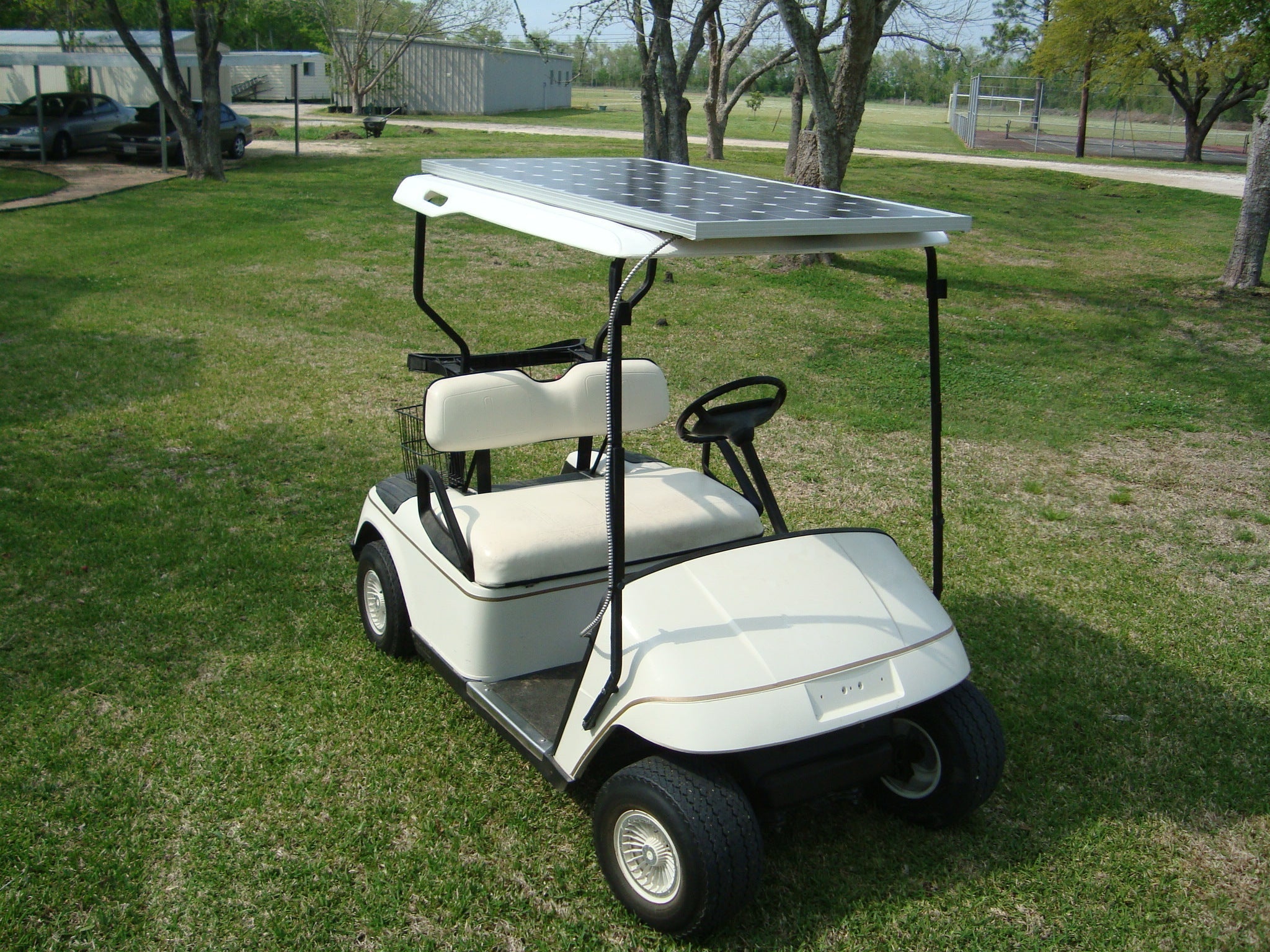
(A solar-powered golf cart demonstrating extended range through renewable energy.)
5. Smart Tech Integration: From AI to Connectivity
2026 carts are getting smarter with touchscreen dashboards, Bluetooth apps for diagnostics, and AI-assisted features like route optimization or battery predictions. Trend spotlight: Integration with home smart systems (e.g., Alexa for remote charging) and vehicle-to-grid tech for energy storage. Why it matters: Enhances user experience, with market growth driven by tech-savvy millennials entering golf/resort lifestyles.
6. Lifted and Off-Road Customizations
Lifted carts with all-terrain tires are booming for non-golf uses like hunting, farming, or beach cruising. 2026 sees more factory-lifted options with 6–8 inch lifts standard. Trend spotlight: Custom rims, LED underglow, and brush guards for rugged appeal. Why it matters: Expands market beyond golf, contributing to 6.4% CAGR through 2034.

(A lifted golf cart navigating off-road terrain, highlighting customization trends.)
7. Commercial and Fleet Expansion
Utility carts for warehouses, airports, and resorts are growing faster than golf models, with electric fleets reducing operational costs. Trend spotlight: Autonomous prototypes for large campuses, projected to hit mainstream by 2030. Why it matters: Commercial segment drives 15% of North American growth.
8. Premium and Luxury Models
High-end carts with leather seats, soundbars, fridges, and AC are trending for resorts and gated communities. Trend spotlight: Brands like Tara and Atlas lead with LiFePO4 batteries and smart monitoring. Why it matters: Luxury segment grows at 5–7% CAGR.
9. Regional Market Shifts
North America holds 55% share ($729 million in 2024), but Asia-Pacific surges to $525 million by 2030 due to tourism. Trend spotlight: Europe emphasizes emission-free models amid regulations. Why it matters: Global expansion offers export opportunities.
10. Sustainability and Regulatory Push
Carbon-neutral manufacturing and recycled materials are key, driven by emission norms. Trend spotlight: Solar and hybrid innovations reduce footprint. Why it matters: Supports 6.93% CAGR to $4.58 billion by 2035.
Wrapping Up: What 2026 Means for Buyers and Dealers
2026 is the year golf carts go mainstream—electric, smart, and versatile. For buyers, focus on lithium and tech; for dealers, stock upgrades. The market’s $1.87 billion growth signals exciting times ahead.