
The Growing Influence of Chinese Golf Carts on the American Market: Challenges and the Case for American-Made Choices
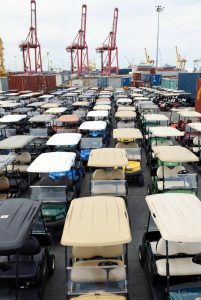

The golf cart industry has evolved dramatically in recent years, expanding beyond traditional golf courses into neighborhoods, resorts, campuses, and utility applications. While this growth has brought innovation and affordability, the surge in Chinese-made golf carts and components has introduced significant challenges for U.S. buyers and dealers.
The Rise of Chinese Imports and Their Impact
In 2024, China supplied 99% of the $703 million in assembled golf carts imported to the U.S., dramatically eroding market share for domestic manufacturers like Club Car, E-Z-GO, and Yamaha (now holding just 37% of the industry). Chinese brands often undercut prices by 30-50%, appealing to budget-conscious buyers with low-cost models.
However, this influx has created real problems:
- Supply Chain Disruptions and Inventory Issues — A rush of imports in late 2024 (to beat anticipated tariffs) led to massive port stockpiles. These flooded the market in 2025, causing temporary price drops but also erratic availability and potential sell-offs that destabilize pricing.
- Parts Availability and Long-Term Support — Many Chinese models face scarce replacement parts, limited warranties, and unreliable service networks. Owners report backorders, delays, and even brands disappearing from the market, leaving carts unrepairable.
- Quality and Safety Concerns — Cheaper imports have been criticized for inferior materials, poor fit/finish, and questionable safety features (e.g., inadequate braking or street-legal compliance). Reports highlight rust-prone frames and inconsistent performance compared to established U.S. brands.
In response, the U.S. government imposed steep antidumping and countervailing duties in 2025—ranging from 31% to over 600% in some cases—due to findings of unfair subsidies and “dumping” (selling below fair value). These tariffs aim to level the playing field, but they have driven up costs for imports and highlighted vulnerabilities in global supply chains.
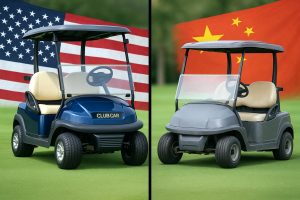
The Reality of “American-Made” Brands
Even major U.S. manufacturers like Club Car, E-Z-GO, and Yamaha source many components (e.g., motors, batteries, and electronics) from China or other global suppliers. Tariffs on these parts increase production costs, potentially raising prices for everyone and underscoring the interconnected nature of modern manufacturing.
Looking ahead, this reliance poses risks: continued tariffs could force price hikes, supply shifts, or even relocation of production. However, U.S. brands benefit from domestic assembly, established dealer networks, and rigorous quality standards—advantages that help mitigate disruptions.
Why Choose American-Made Products?
Despite global sourcing, buying from established U.S. manufacturers offers clear benefits:
- Reliable Parts and Service — Extensive dealer networks (like Intermountain Golf Cars) ensure quick access to genuine parts and expert support, reducing downtime.
- Superior Build Quality — Features like Club Car’s aluminum frames resist corrosion better than many imports, while E-Z-GO and Yamaha provide automotive-grade engineering for durability and performance.
- Long-Term Value — American brands hold resale value better, come with strong warranties, and support local jobs and communities.
- Future-Proofing — With tariffs encouraging reshoring and innovation (e.g., advanced batteries, connectivity), U.S.-made carts are positioned for growth in emerging markets like short-distance driving and last-mile delivery.
As the industry navigates tariffs, supply shifts, and rising demand, choosing a trusted American brand means investing in reliability over short-term savings.
At Intermountain Golf Cars, we proudly carry Club Car and other top U.S. models with expert sales, service, and parts support across Utah, Idaho, Nevada, and Arizona. Visit intermountaingolfcars.com or contact us at (801) 255-8828 to find the right cart for your needs.
What are your thoughts on the impact of tariffs and imports? Share in the comments below!